Posted on Leave a comment

Sustainability at HITEK: Discover a Greener Future

At HITEK, sustainability isn’t just a commitment – it’s a core part of our long-term strategy. As Global Recycling Day approaches, we take this opportunity to reflect on the steps we’ve taken to minimise waste, improve energy efficiency, and embed environmentally responsible practices into our operations.

A Structured Approach to Sustainability

Our commitment to reducing environmental impact is reinforced by our ISO14001 accreditation, which provides a structured framework for managing sustainability initiatives. This accreditation demonstrates our ongoing efforts to lower emissions, improve waste management, and increase energy efficiency.

One of our biggest milestones has been our transition to renewable energy. By investing in solar panels, we have significantly reduced our reliance on non-renewable power, cutting our carbon footprint by 69% in 2024. Additionally, 60% of our company fleet is now fully electric, with the remaining 40% hybrid, further reducing our emissions.

Enhancements to our facility, such as upgraded roof insulation, have also improved energy efficiency.

Reducing Waste, Increasing Recycling

Sustainability extends beyond energy use—it’s also about responsible waste management. At HITEK, we have implemented a structured waste hierarchy to prioritise reduction, reuse, and recycling before considering recovery or disposal. Our approach includes:

  • Prevention – Reducing material use in design and manufacturing while extending product lifespans.
  • Reuse – Checking, cleaning, repairing, and refurbishing equipment to maximise longevity.
  • Recycling – Repurposing materials efficiently to create new solutions.
  • Recovery – Exploring innovative solutions such as anaerobic digestion and waste-to-energy conversion.
  • Disposal – Always a last resort, with every effort made to divert waste from landfill.

To support this, we’ve introduced segregated recycling bins throughout our facilities, ensuring waste is sorted effectively for maximum recycling potential.

Driving Continuous Improvement

Our internal ‘Gimme 5’ initiative reinforces our sustainability commitment by targeting a 5% year-on-year reduction in gas, electricity, and water consumption. From 2025, CO₂ emissions and waste will also be included, encouraging every department to identify and implement improvements. By engaging employees through education and awareness, we empower our team to make environmentally conscious decisions in their daily work.

Building a Greener Supply Chain

Beyond our internal efforts, we recognise the importance of working with sustainability-focused partners. That’s why we collaborate with companies like Henkel, ensuring our supply chain aligns with best practices in green manufacturing. These partnerships help us make a broader impact by driving environmental responsibility across industries.

Committed to a Sustainable Future

Sustainability is an ongoing journey, and at HITEK, we’re dedicated to exploring new ways to integrate greener practices into every aspect of our business. As we mark Global Recycling Day, we reaffirm our commitment to reducing waste, enhancing efficiency, and leading by example in the industries we serve.

By continuously innovating and improving, we are not only reducing our carbon footprint but also future proofing our operations for the years ahead.

Posted on Leave a comment

HITEK Health Heroes: Our 2025 Wellbeing Journey

Health and Wellbeing Programme Participants

At HITEK, we pride ourselves on protecting technology in the most demanding environments. But just as we ensure electronics remain resilient, we also want to ensure our people thrive.

That’s why, in January, a group of HITEK employees embarked on an 8-week health and wellbeing programme in partnership with North Lincolnshire Council’s Healthy Lifestyles team. The goal? To equip our team with the knowledge and support needed to make sustainable changes in their everyday lives.

A Holistic Approach to Wellbeing

The programme covered a wide range of areas, including:

  • Nutrition and portion control
  • Physical activity and movement
  • Sleep quality and recovery
  • Habit formation and mindfulness

Through expert-led sessions and ongoing support, our colleagues gained practical strategies to improve their overall health.

Real Stories, Real Impact

The results have been truly inspiring! Participants have shared their experiences of improved energy levels, better sleep, and a greater understanding of how to make healthier choices.

Some of the comments we have received from participants include:

“I enjoyed the content covered on habit building, I have started running and I am building that up gradually with the motivation to do ‘couch to 5k’ once the lighter evenings start. The programme has tied everything together for me and I am feeling much healthier.”

“It was good to engage in the programme alongside my colleagues, we had the opportunity to discuss topics and have conversations about health and wellbeing which we wouldn’t have otherwise had,” 

Our HR Manager, Shirley Large, highlighted the importance of initiatives like this in creating a workplace that values wellbeing:

“At HITEK, we understand that a healthy team is a happy and productive team. This programme has been a fantastic way to support our employees in making positive changes that benefit both their work and personal lives.”

Chloe Hutton who is part of North Lincolnshire Council’s Healthy Lifestyles team also recognised the value of collaboration in workplace wellbeing:

Looking Ahead

“Partnering with businesses like HITEK allows us to support employees in making informed lifestyle choices that have lasting benefits. It’s great to see organisations prioritising health and wellbeing in this way.”

This initiative is just the beginning. At HITEK, we’re committed to fostering a culture where wellbeing is at the heart of our workplace. Whether through future programmes, workplace activities, or simply encouraging conversations around health, we’ll continue to support our team in leading healthier lives.

A big thank you to everyone who took part, you are all HITEK health heroes! For more information on the benefits of working for HITEK and how we look after those who work for us, please contact hello@hitek-ltd.co.uk.

Posted on Leave a comment

Strengthening Partnerships: HITEK Visits ABS Technics in Belgium

At HITEK Electronic Materials, we believe that strong partnerships are the foundation of delivering high-quality solutions to our customers. This commitment to collaboration recently took our Managing Director, Jim Lawton, and Operations Director, Roger Dent, across the Channel to Belgium, where they visited our trusted partners at ABS Technics.

ABS Technics supplier logo

A Warm Welcome in Mol

Jim and Roger were hosted by ABS Technics’ Managing Director and Founder, Johan Kenis and Co-owner, Jan Luyten, at their headquarters in Mol, where they were given an in-depth tour of the facilities. The visit provided valuable insights into the latest innovations in microwave absorbers, including advanced carbon-loaded foams, exclusively available in the UK through HITEK.

Reflecting on the visit, Jim Lawton shared:

“Visiting ABS Technics was a fantastic opportunity to see their expertise in action. Their commitment to innovation and precision manufacturing is truly impressive, and it reinforces why our partnership is so valuable. By working together, we can continue to bring the best solutions to the UK market.”

Innovation in Microwave Absorption

The visit highlighted the latest advancements in microwave absorbers, which play a crucial role in managing electromagnetic interference across various industries. ABS Technics has been at the forefront of developing high-performance solutions, ensuring that customers benefit from materials that meet the most demanding technical requirements.

Johan Kenis of ABS Technics, expressed his enthusiasm about the visit:

“It was a pleasure to welcome Jim and Roger to our facility. At ABS Technics, we take pride in our innovative approach to microwave absorption materials, and working with HITEK allows us to extend these innovative solutions to a wider audience in the UK. Strengthening our collaboration ensures that customers receive both high-quality products and expert technical support.”

Looking Ahead

This visit reinforced the importance of partnership and shared expertise in delivering market-leading solutions. HITEK and ABS Technics are committed to continuous innovation and ensuring that customers have access to the best materials for their applications.

Click here to explore the full range of ABS Technics solutions available through HITEK.

We look forward to further strengthening our collaboration and bringing even more value to our customers in the future!

Posted on Leave a comment

Technical Tips: Surface Prep for Epoxies, Acrylics & Silicones

tech tips - Surface Preparation for Epoxies, Acrylics and Silicones

Surface preparation is a critical aspect in the use of epoxy resins. In order to create an effective bond, the surface must be clean. Dirt, oil, moisture and weak oxide layers prohibit good adhesive bonding, and must be removed through proper surface preparation methods. Otherwise, the adhesive will bond to these boundary layers rather than to the substrate. Surface preparation enhances the quality and permanence of a bonded joint by performing one or more of the following functions:

  • Removing contaminants
  • Controlling absorbed water
  • Controlling oxide formation
  • Poisoning surface atoms that catalyse polymer breakdown
  • Matching the substrate crystal structure to the adhesive molecular structure

Sufficiently clean surfaces can usually be obtained by thorough one of the following

  • Surface degreasing with a solvent
  • Wire brushing
  • Sand blasting

This is usually adequate for most metals and plastics. Once the surface has been cleaned, precautions should be taken to eliminate contamination of the cleaned surface.

The following surface preparations have been recommended in the literature. Where appropriate, they are followed by a neutralising rinse, a water rinse and an oven dry.

Ferrous metals

Sand blasting with grease free sand or wire brushing has been found generally satisfactory for iron. In some cases
chemical cleaning solvents can be used

Non-Ferrous metals

Aluminium and aluminium alloys:

Degrease and dip for 10 minutes at 70°C in the following solution (parts by weight):

  • 66 pbw Sodium dichromate
  • 666 pbw 96 % sulphuric acid
  • 1000 pbw Water

The solution should not be overheated, since at temperatures above 70°C there is a re-arrangement of the
surface of the aluminium, which leads to poor bonds. The sodium dichromate etch gives a controlled and
porous layer of aluminium oxide on the surface. If this film is exposed to air too long, the film will become too
thick and this will lead to poor adhesion. Therefore, material should be bonded within 2 hours after the
etching.

Copper and copper alloy

Etch for 1 to 2 minutes at room temperature in the following solution (parts by volume):

  • 15 pbv 42% ferrite chloride
  • 30 pbv concentrated nitric acid
  • 197 pbv water

Gold

Degrease and roughen surface

Lead

Degrease and abrade with emery cloth

Nickel

Etch 5 seconds in concentrated HNO3.

Zinc and Zinc alloys

Degrease and abrade with emery cloth. Apply epoxy resin immediately. Material can also be etched by using
an etch solution (20 parts concentrated HCl/80 parts water) 2 to 4 minutes at room temperature.

Other Surfaces

Thermosetting Plastics

Clean the surface with a solvent, followed by a light sanding to remove surface contamination. This treatment has
been found satisfactory for diallyl phthalate, epoxy, phenolic, polyester, polyurethane, and urea-formaldehyde
resins.
For some plastics a plasma treatment can be used to obtain good adhesion. Specialised companies should be
contacted to receive detailed information.

Carbon

Degrease, abrade with fine emery cloth and degrease.

Ceramic

Degrease, abrade with carborundum/water slurry.

Glass

Solvent cleaning with trichloroethylene.

The degree to which substrates must be prepared depends upon several factors including the ultimate bond strength required, the degree of performance needed, the service environment, the amount of contamination on the substrate and the type of substrate.
For example, for plastics surface preparation can be more effective than for metals, as most are contaminated with either mould release or wax which must be removed prior to bonding.
In encapsulation applications, it is important that good bonding is obtained with the surface of the substrate of the housing. Bond strengths and bond performance depend greatly on the type of substrate which is in contact with the encapsulant. The main purpose of surface preparation is to ensure that adhesion develops in the joint between substrate and encapsulant, in order to minimise moisture absorption and to improve chemical resistance at this
interface.

Want an offline copy? Download it below!

Posted on Leave a comment

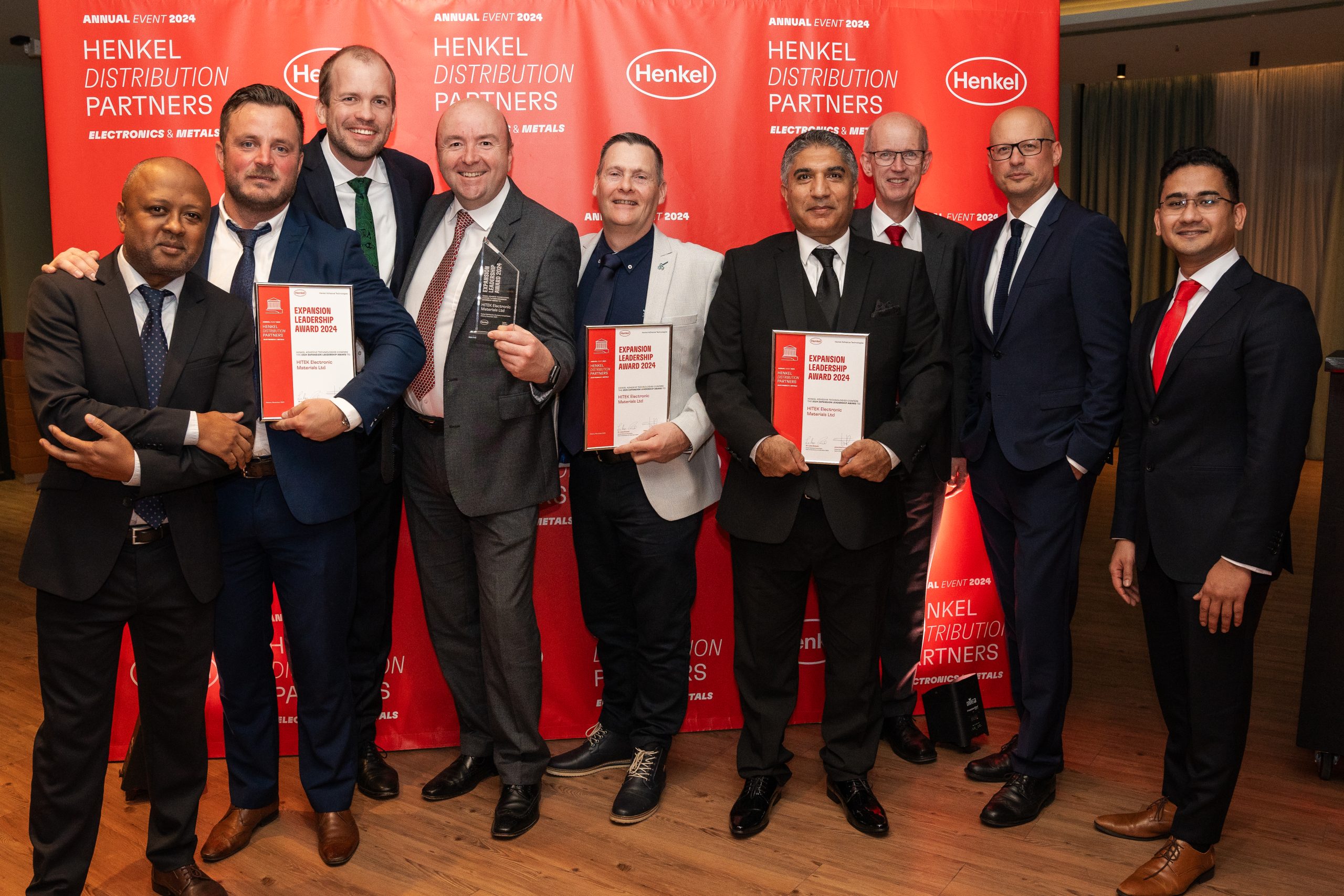
HITEK at the Henkel annual supplier awards 2024

HITEK receiving an award from Henkel to highlight great partnership

During the third week of November Henkel hosted its annual supplier awards. HITEK attended the ceremony in Greece with other electronics and metals distributors for Henkel.

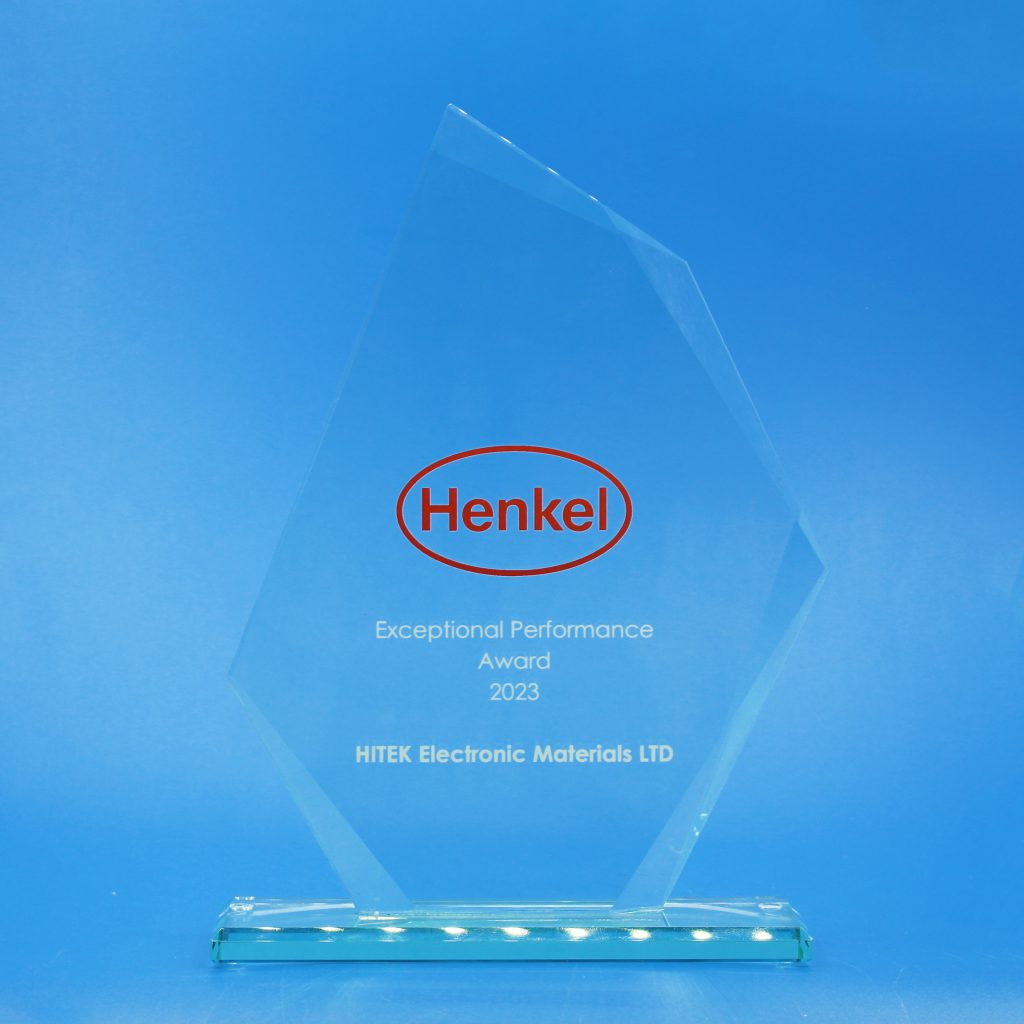
At this years event HITEK won the “Expansion Leadership Through Continuous Growth award” which made us back to back winners having won the “Exceptional Performance Award” last year.

IMG 2526 1
HITEK’s 2023 Exceptional Performance Award

HITEK’s Managing Director took to LinkedIn to share the news of the award. Furthermore he congratulated his team stating he was ‘Very proud of my team at HITEK Electronic Materials Ltd long may it continue.’

Posted on Leave a comment

HITEK History – HITEK’s Website Turns One

Today marks 1 year of this HITEK website. 

This time last year we bid farewell to our old website by it “glitching “transforming” into our new website. A year on since that faithful day a lot has changed.  

From hundreds of new products arriving onsite, to our new RFQ system we’ve been constantly building and improving our site. While this is only a small milestone, there is a lot more to come over the coming months and we hope that our efforts are worthwhile as our site continues to grow in age! 

Take a look at how we announced our site below. 

#HITEKHistory #Website #protectingyourelectronics

Posted on Leave a comment

Technical Tips – Applying Cho-Bond 1038 & 1075

Today we bring you a Technical Tips on applying Cho-Bond 1038 & 1075.

The application of Cho-Bond typically starts with a primer . Then solvent-based primer dries up quickly meaning that it is effective when used on metalwork/grooves. Cho-Bond can then be applied as a thin layer to create a gasket.

To find out the full works on how to properly apply Cho-Bond 1038 & 1075 read the full piece here.

#protectingyourelectronics #Chomerics #Application #protectingyourelectronics

Posted on Leave a comment

Technical Tips – Degassing Adhesive Products

tech tips - degassing adhesive-01

Although most, if not all, suppliers of formulated Epoxy and Polyurethane materials manufacture products
under vacuum. This still can cause some undesirable trapped gases that appear while using these compounds.

The most common causes of bubbling

  • Air inclusion during the mixing of the resin and hardener together.
  • Air trapped in moulds.
  • Air trapped due to improper casting/moulding techniques.
  • Air introduced by suction as the material shrinks or due to a leaking tool.
  • Trapped residual solvent vapours from certain types of mould releases.
  • Volatile components being stripped out of the materials while casting under vacuum.
  • Gases generated during the reaction (hardening) process.
  • Gases formed during improper storage (moisture contamination etc.)
  • Gases introduced through pressurized systems.
  • Air from improperly de-aired resin and/or hardener.

How to solve/prevent the issue?

The first and most important step in eliminating the problems caused by bubbles is simply taking care not to introduce air while handling the materials. If it is unavoidable to introduce air during mixing, such as during mixing by hand, it is highly desirable to remove the trapped gases under vacuum before using the mix. Gaseous bubbles trapped in a liquid, although initially microscopic in size, will expand when heated and can grow to become large enough to cause problems.
Polyurethane products are moisture sensitive. In fact they crave moisture and should not be mixed during days when the humidity is high. Urethane resins and hardeners should be protected from picking up moisture by applying a layer on Nitrogen on top of the material in the containers. Mixing urethane resin and hardener components together is best achieved under vacuum or at least under a blanket of Nitrogen. Moisture contaminated polyurethane products will exhibit many tiny bubbles on the surface or, in extreme cases, will rise to produce foam. These bubbles are next to impossible to remove.

As a rule, epoxy compounds are less moisture sensitive, except for certain hardeners. Moisture contaminated epoxy hardeners can be usually recognized by the formation of a crust around the edges of the container.

Moisture contaminated epoxy hardeners, depending on the formulation, will react faster than expected with the resin.
Bubbles tend to rise to the surface of the material and will, under ideal circumstances, given enough time,
will eventually release from the liquid. Most applications do not allow for the required time or the proper
conditions for products to self de-air, vacuum must be applied to speed the removal of trapped gases from
the mix

What can affect the process of removing gasses?

  • The viscosity of the mix: The higher the viscosity the more difficult it is to remove gases.
  • The surface tension of the materials: Can be reduced by heating and the addition of surfactants
  • The temperature of the epoxy or urethane mix: Heating the material will reduce the viscosity. Be sure to consider the pot life and gel time before heating any mixed materials.
  • The amount of epoxy or urethane material being de-aired at one time:
    • The depth to surface ratio is important.
    • The larger the surface that is exposed to the vacuum the better.
  • The lower the amount of product the rising bubbles must travel through the better. Agitation: Agitation (mixing) during the de-airing process (while under vacuum) will speed the removal of air considerably.

Alternative methods to remove or minimise the impact of trapped gasses

  • Thin film de-airing: The material is exposed to vacuum in a thin film. This is probably the best and fastest method of removing trapped gases.
  • Centrifugal force: Trapped gases may be forced out of the product by centrifugal forces by spinning at high speeds. This is not a widely practiced method and has limited possibilities in common applications.
  • Pressure: The application of pressure during the gelation process will reduce the size of the bubbles. The amount of pressure necessary will have to be determined by experimentation. Depending on the component configuration it is not uncommon to use 80 to 100 psi.
  • Vibration: Placing the mixture on a vibrating table will assist the bubbles in travelling to the surface.

How to produce bubble free epoxy or urethane castings

  • The least number and amount of volatile ingredients.
  • The lowest possible viscosities (individual components and mixed)

Hand Mixing

  • De-air each component containing fillers individually.
  • Do not use violent motion during mixing and scrape the sides of the container to insure a thorough mix. De-gas the mixture under vacuum if possible.
  • If vacuum is not available, allow the mix to stand for a period of time to allow the coarse
  • bubbles to escape prior to pouring (don’t forget to consider the pot life)

Mix/Dispense Equipment

  • Take precautions to minimize air entrapment while topping up the storage tanks. Slow, steady pouring into one spot will minimize air inclusion. De-air the materials in the storage tanks if possible.
  • Keep the fittings, valves and dispense pistons in good repair. Defective components will allow air to be sucked into the dispense lines.
  • Cavitations and lead/lag problems can be sources for air inclusions.

Pouring

  • Pour slowly into one corner of the mould or container. Pouring slowly will allow the rising material to push the air ahead of it minimizing air entrapment.
  • Pour with the least amount of turbulence.

Curing

  • If possible, de-air the poured assembly prior to cure. This step is not necessary for parts involving small volumes. Large mass castings or castings with complicated shapes, conducive to air entrapment, should be de-aired prior to cure for best results.
  • Establish and use the appropriate temperatures that result in slow, even gelation. Provide a enough reservoir of cool material to replenish the shrinkage that takes place during gelation and cure.

Other Suggestions

  • Hydraulic hose fittings on vacuum lines allow for leak free connections and better vacuum.
  • 29” Hg of vacuum is sufficient for most applications.
  • 2 mm of vacuum has been found sufficient for high volume production.
  • Always use a large enough container to allow the material to rise under vacuum.
  • It may be helpful to add a drop or two of a suitable surfactant.

Precautions

Almost all formulated epoxy and urethane materials contain at least some volatile ingredients. These ingredients are an essential part of the product and will start flashing off under vacuum. This is evidenced by the fact that the mix being de-aired never seems to be totally free of bubbles no matter how long it is vacuumed. Care should be taken not to vacuum strip the material. In most cases vacuum at 29” Hg for 5- 10 minutes will sufficiently de-gas the mixture.

Download a copy of the technical tips below

Posted on Leave a comment

Technical Tips – Surface vs Volume Resistivity

Today we bring you a Technical Tips on how to measure resistance of materials.

There are two main methods used to calculate resistance of elastomeric materials, a pressure probe or a surface probe (in this case a CHO-PROBE). With the use of these probes different methods can be used to calculate the Volume resistivity,

Check out the full tech tips from Parker Chomerics below to get a better grasp on the topic!

#Resistivity #TechTip #protectingyourelectronics #SurfacevsVolumeResistivity 

Posted on Leave a comment

Capabilities – Onsite services

Applying an anti-corrosion solution can sometimes be a challenging task, whether due to insufficient training or encountering outcomes different from what you’ve seen before. While receiving advice over the phone can be beneficial, we have the resources and expertise to visit your site and provide hands-on assistance.
In partnership with our sister company @HITEK-nology Solutions we can offer anti-corrosion control services.

Services that can be provided are:


• Maintenance of equipment to prevent equipment failure
• Long term lay-up of stored equipment
• Protection of mission critical equipment
• Environmentally friendly descaling
• Corrosion removal
• Application of anti-corrosion coatings to create a barrier between the metal surface and the outside environment

Interested? Fill out a form here: https://www.hitek-ltd.co.uk/services/onsite-services

#Capability #HSL #protectingyourelectronics